3 November 2026 · 5 min read · Part 3 & Standards Check
Don't Be a Windscreen Instructor: How to Watch Your Pupil as Well as the Road
"Was the trainer aware of the surroundings and the pupil's actions?" It's one of the competencies you're marked on at Part 3 and Standards Check, and it catches out more instructors than you might expect.
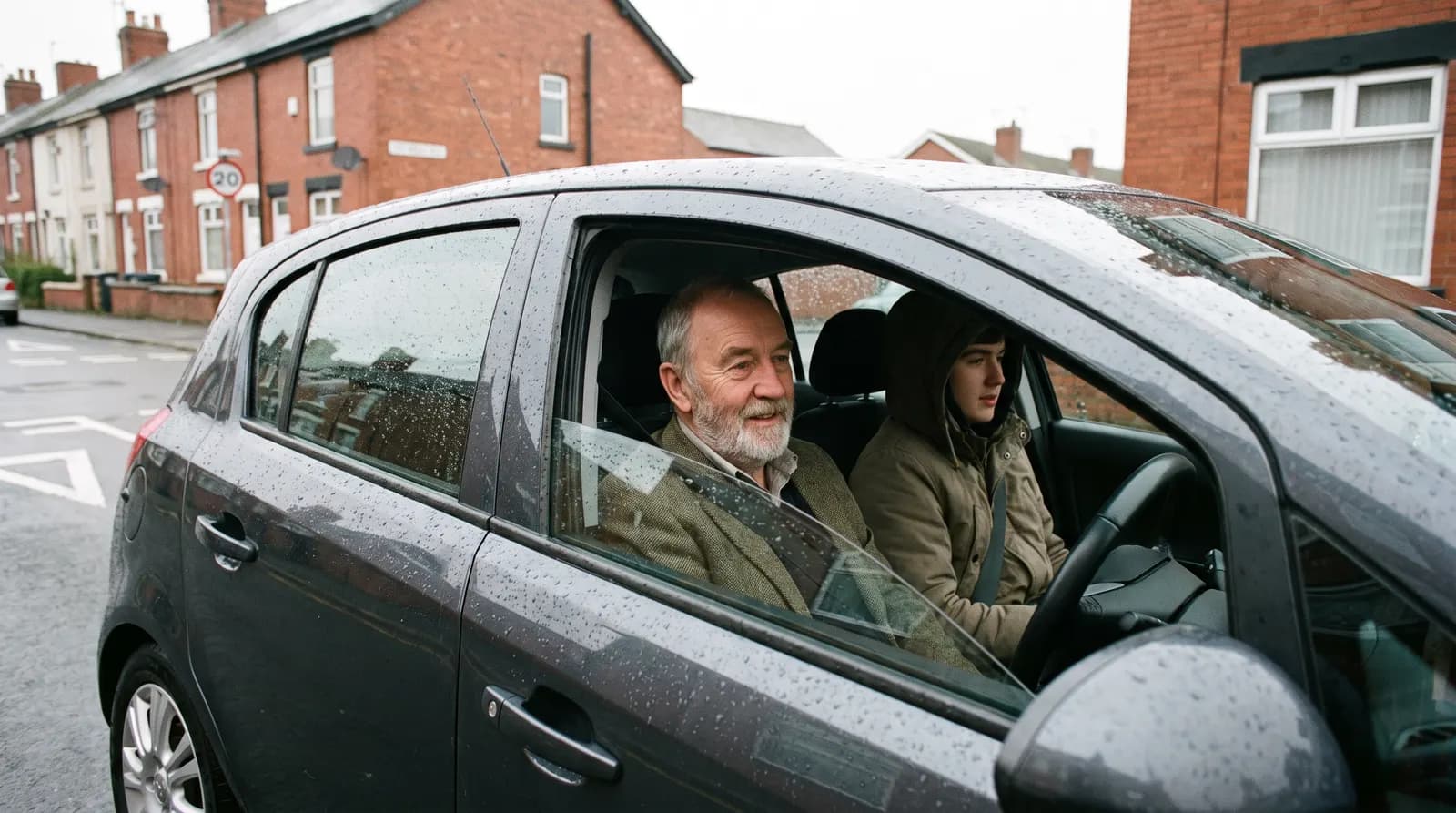
The usual culprit has a name: the windscreen instructor. That's the instructor who spends the lesson staring out of the front and talking to the glass, rarely looking at the pupil sitting next to them. It's a typical PDI fault, and we completely understand why it happens. You're keeping the lesson safe, making sure the car doesn't hit anything you're heading towards. But if your eyes never leave the road, you're missing half the job.
In this post we'll look at what you miss when you only watch the road, how being further ahead of the pupil buys you the time to watch them, and some simple tricks for doing both without giving the game away.
What you miss when you only watch the road
Your ability to watch your pupil is fundamental to helping them build the life skills they need as a driver. Faults that matter for years to come often don't show up through the windscreen at all.
Take the mirrors. Some pupils do the oddest thing: they make a small movement towards the mirror, as if they're looking in it, but they aren't actually taking anything in. Others have a habit we like to call the bombastic side eye, a sideways flick of the eyes towards the left door mirror instead of a proper look.
If you're looking out of the front, you won't see either of those. The car still goes where it should, nothing appears to have gone wrong, and the habit quietly beds in. If you do see it, you've got a conversation to have about what they're doing and why, and that's where the development happens.
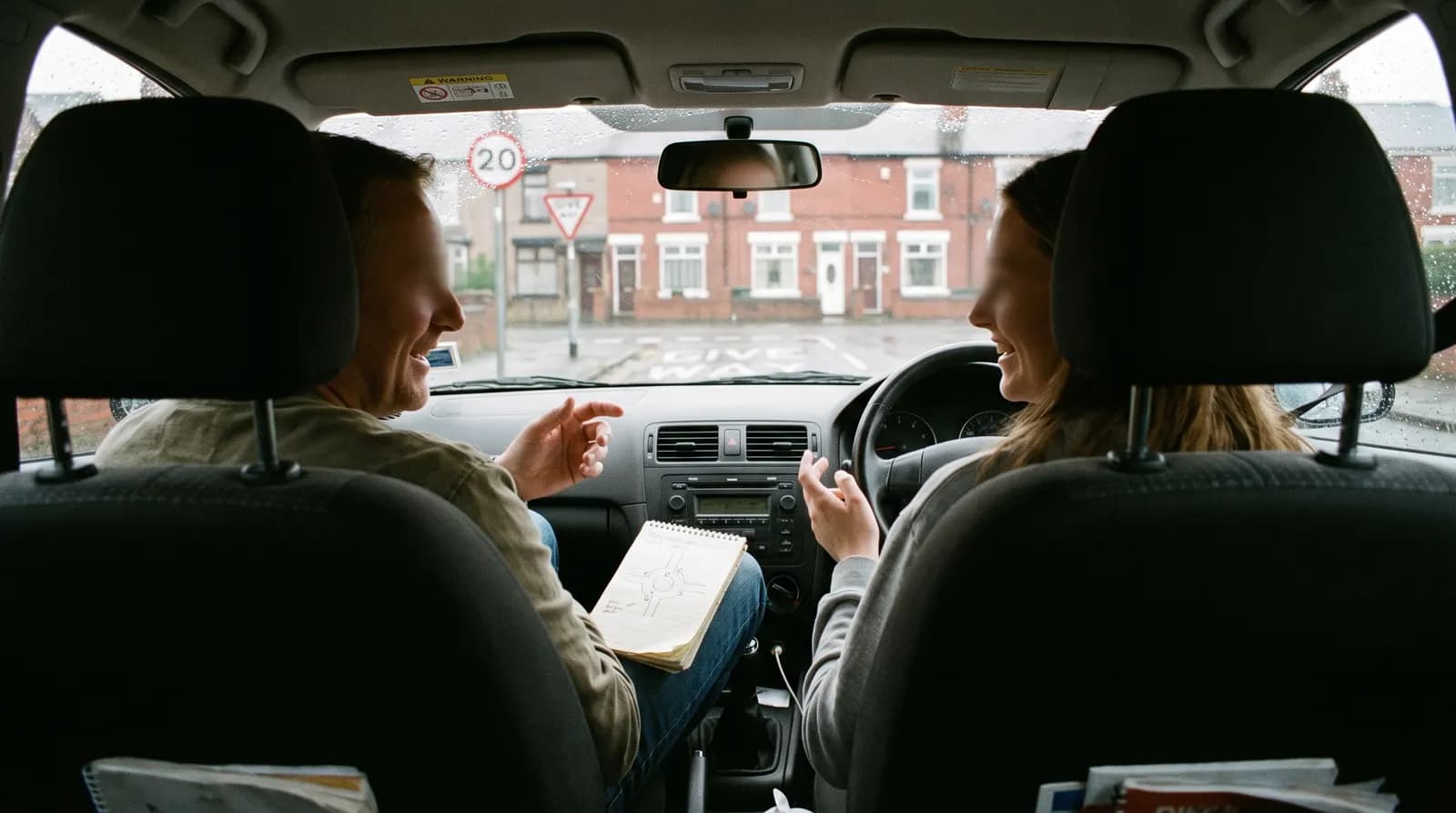
That conversation matters as much as the spot. We always start from curiosity, never judgement. You might simply say that you've noticed they use their eyes in a certain way for that left mirror, and ask what made them choose to do it like that. It's an open, friendly question, and it's one you can only ask if you were watching in the first place. For more on this side of things, have a read of our post on asking relevant questions.
Get further ahead, so you've got time to look
Windscreen instructing comes from somewhere. Underneath it is an instinct to make sure the lesson is safe, and that's a good instinct. The answer isn't to stop looking at the road. It's to look further up it.
Aim to be at least 30 seconds ahead of what you think your pupil might do. It's part of why the eyesight requirement for instructors is set further out than it is for pupils: we need to know what's likely to cause an issue well before the learner has noticed it.
Think about a bend coming up. The order goes something like this:
- See the bend early, long before your pupil is thinking about it.
- Check behind and assess the situation for yourself.
- Then watch the pupil, because now you know the picture and you've got the capacity to see what they do with it.
Once you've got that sequence going, you stop being surprised by the road, and you're no longer glued to it.
Scan and plan both ways
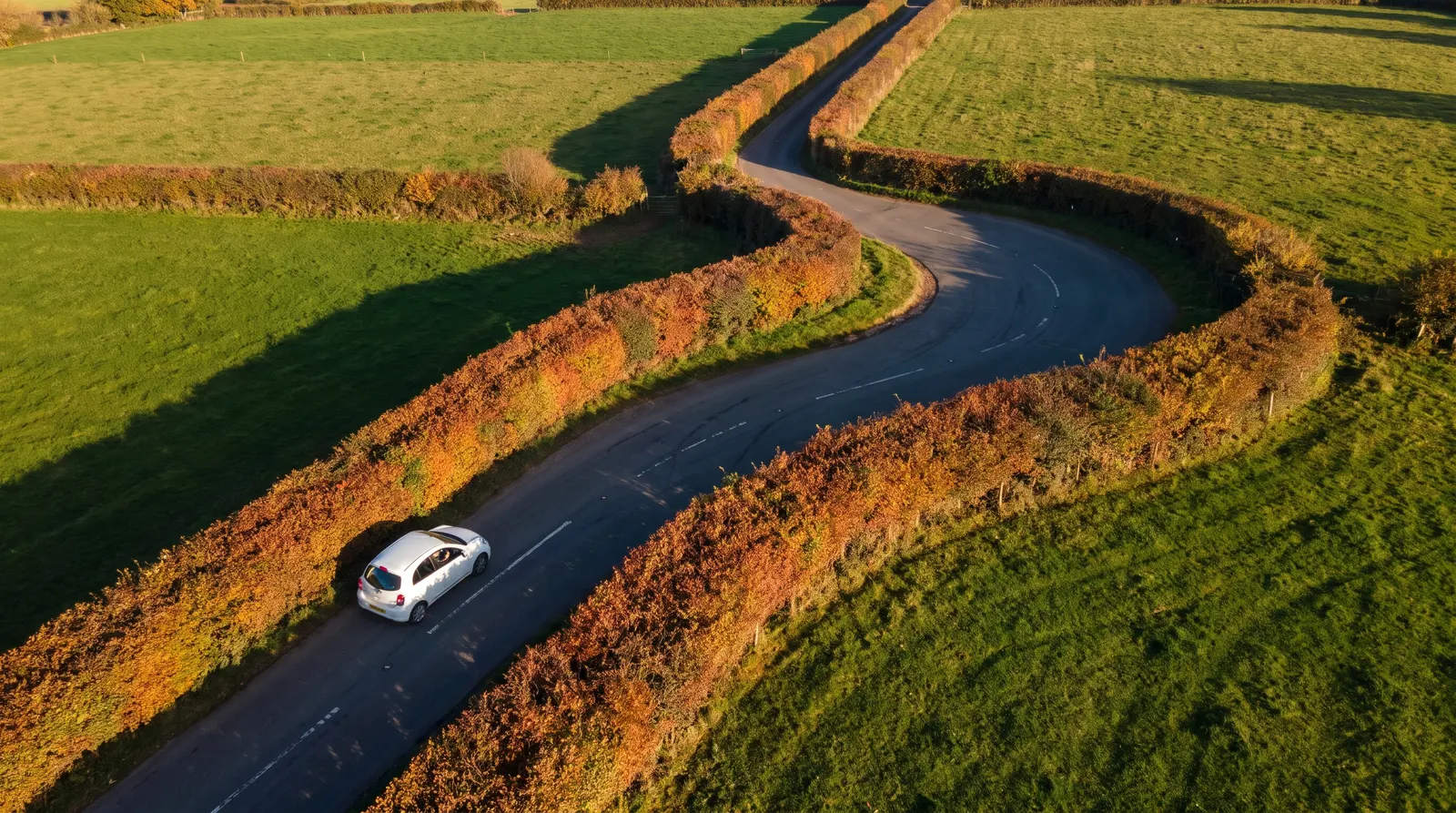
It helps to think about how your eyes work when you're navigating meeting traffic or a country road. They're moving the whole time, scanning and planning. Your awareness on a lesson should work in the same way.
You're not solely focused on the learner, and you're not solely focused on what's going on outside. You're taking in both, glancing at the pupil and back to the road. A short look at the right moment gives you plenty to work with, and you'll soon know whether they're about to do what they should be doing.
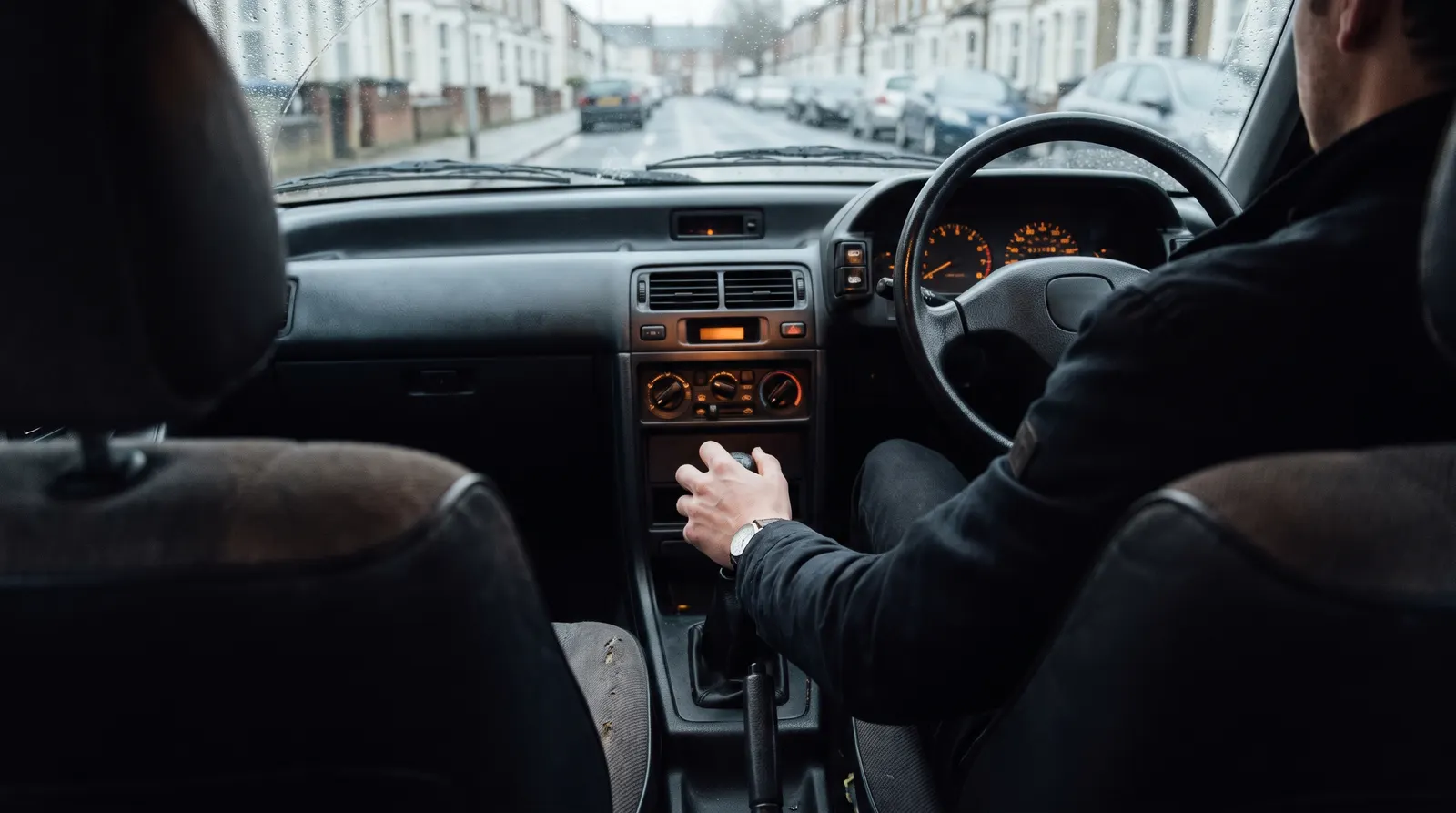
Your peripheral vision is a big part of this, particularly in those early lessons. If you think your pupil is going to need third gear, keep your eyes ahead and let them dart down just to see which gear they choose. Over time you develop a gut instinct for it. You'll know when that hand is about to go for first instead of third, and your reactions become almost ninja-like.
Don't let your eyes become the prompt
Here's the trap once you do start watching. If your pupil is coming up to a junction, a bend or a set of green traffic lights and you turn your head to look at them, that head movement is a prompt in itself. They'll check the mirror because you looked, and you'll never find out whether they would have done it on their own.
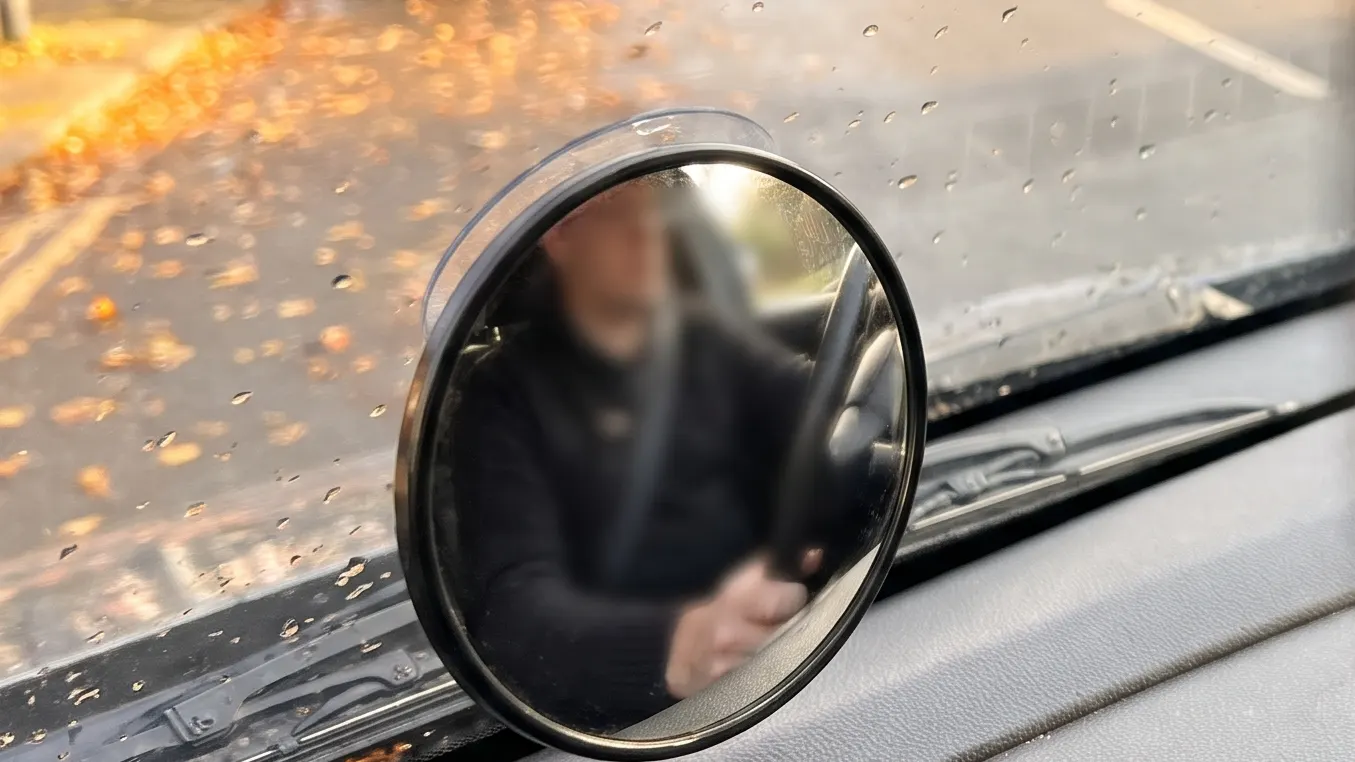
This is where the eye mirror earns its place. Think of it as your wing person. It lets you scan up and to the left and see what your pupil is doing with their eyes, without moving your head at all. It can also tell you a lot from their facial expression. If there's a thought, a feeling or an emotion running through their head, you may well spot it there, and that's another chance to be curious.
The eye mirror does have its limits. It won't show you what their hands and feet are doing, so it's an addition to your scanning and planning, never a replacement for it. And yes, you can also master the bombastic side eye yourself, purely so you don't prompt your pupils with your head.
It starts with your own driving
One last point that often gets overlooked. It's very difficult to recognise what a pupil should or shouldn't be doing if you aren't doing it yourself. That's why your Part 2 and Part 3 training really should be a blended process, and why it should carry on long after you've qualified.
Your everyday driving ought to buy into the same process you teach your learners. Those skills can slip once Part 2 is behind you, and when they do, your eye for spotting them in a pupil slips as well. Next time you're out on your own, notice how you actually use your mirrors. Do you do what you'd want your pupil to do?
Bringing it together
Being aware of your surroundings and your pupil's actions isn't about staring harder at either one. Get further ahead so the road stops surprising you, split your attention with quick glances and good peripheral vision, use your eye mirror so you don't prompt, and keep your own driving sharp. Then, when you spot something, get curious about it.
Try it on your next lesson. Pick one thing, such as how your pupil uses the left mirror, and see what you notice when you're really looking.
If you'd like more practical help with your Part 3 or Standards Check, including recorded sessions and courses, join the Inspire membership and learn with us and a community of instructors who love getting better at this.