6 October 2026 · 5 min read · Part 3 & Standards Check
Clear, Well-Timed Instructions: How to Say Less and Teach More
"Were directions and instructions given to the pupil clear and given in good time?" It's one of the competencies on the Part 3 and Standards Check marking sheet, and it looks simple. Say "turn left" before the turning. Job done.
Except that's not really what it's asking. Directions and instructions means anything that comes out of your mouth. Not just "at the end of the road, turn left", but "clutch down", "brake a little more", and every coaching question you ask along the way. All of it is being judged on two things: was it clear, and was it in good time?
In this post we'll look at what clear really means, how to use timing as a teaching tool, and the trap a lot of instructors fall into without noticing: becoming the distraction.
Everything You Say Is an Instruction
Most PDIs get that route directions need to be clear. Fewer realise that your support and your questions are marked in exactly the same way. If your question is long, vague or badly timed, it counts against this competency just as much as a late direction does.
A pattern we see a lot with newer instructors is using 100 words where 10 would do. That's normal. You're still working out what your questions are and how to phrase them. The fix is reflection: after each lesson, look back at the questions you asked and trim them. Over time they get shorter, sharper and easier for the pupil to process while driving.
What "Clear" Actually Sounds Like
Clear directions leave no room for guesswork. "At the end of the road, turn left" is clear. "Turn left" on its own isn't, because the pupil has to work out which left. Is it the next one? The one after?
Watch out for little habits that cause confusion too. "Right, we're going to turn left at the end of the road" will genuinely throw some pupils, because the first word they hear is "right". Put on your calm, steady voice and keep your wording consistent.
This is one area where it's worth borrowing from the examiners. We're not fans of teaching to the test, but examiners phrase directions the way they do because it's clear. Using the same structure means your pupils get used to that language long before test day.

Watch Your Words: Smidges and Feathers
Some of the least clear instructions come from words that feel natural to us but mean nothing to a learner. A couple of real examples from recent sessions:
- "Brake a smidge more." How much is a smidge? The pupil has no way of knowing.
- "Feather the clutch." If you've already talked through what that means, fine. If not, the pupil is left guessing. Even if they do know the phrase, is that clutch up or clutch down?
Compare those with "clutch up a little bit more for me", "clutch up an inch", or "clutch up until you feel the bonnet lift". Each one gives the pupil something specific to do and a way to know when they've done it. That matters most when a pupil is already struggling.
Timing Is a Teaching Tool
Good timing isn't just "early enough". You can change when you give a direction depending on what you want the pupil to learn.
- Give it early when you want the pupil to practise spotting where the junction actually is.
- Give it at the point they should start their routine when you want the direction to act as a prompt to get ready.
There's a catch with the second one. If the direction is always the trigger, then the day you take it away, the pupil doesn't start the routine at all. So vary your timing on purpose, and help the pupil learn to trigger the routine for themselves.
Timing matters even more for control instructions. If you've agreed to support the pupil with the clutch, "clutch down" can't wait until the car is juddering and about to stall. That instruction has to travel out of your mouth, into their ears, through their head and down to their feet. That takes time. Aim for just before you'd do it yourself as a driver, not at the moment you'd do it.
Don't Be the Distraction
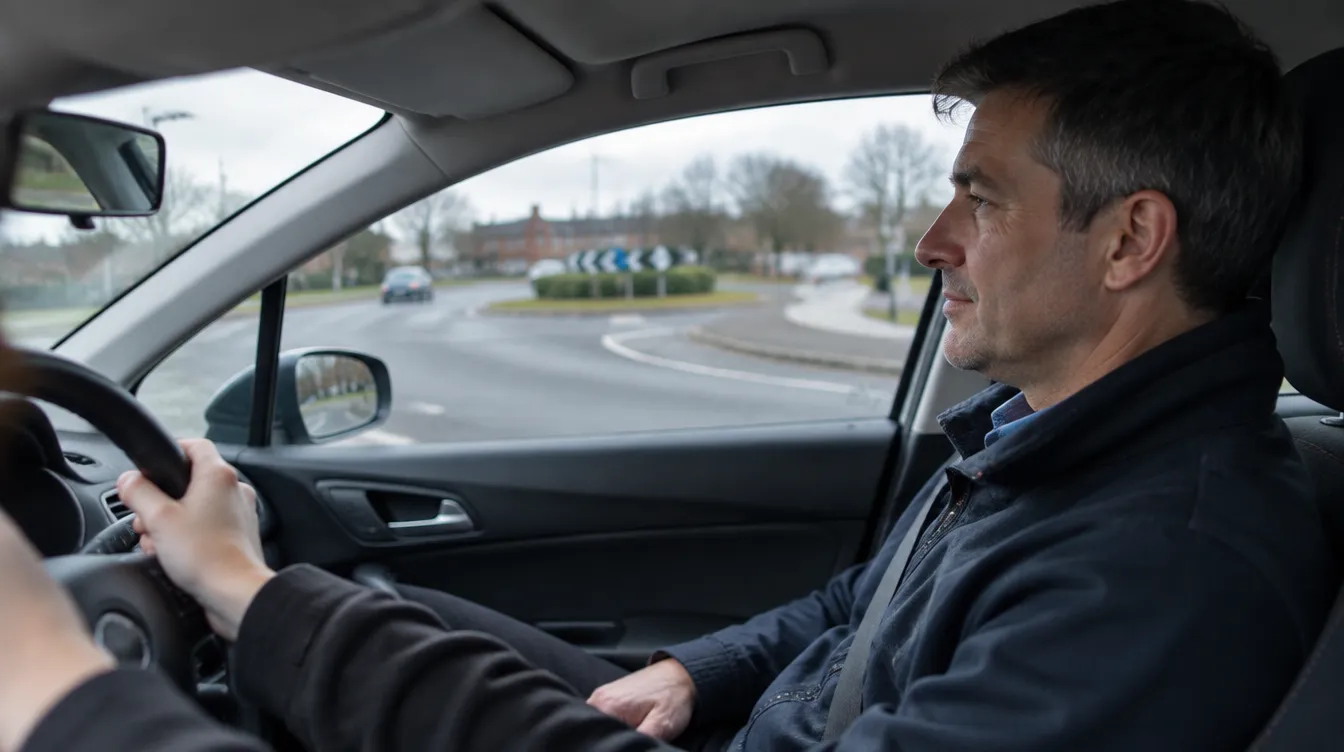
This competency also covers something easy to miss: you shouldn't be the problem. Bombarding a pupil with questions or instructions can overload them just as badly as a busy junction.
We've seen this in role play, where the "pupil" is approaching a roundabout and gets hit with "Are you checking your mirrors? When are you going to signal? Where's your position?" all at once. Even a confident driver struggles to answer all of that and drive at the same time.
Think about having a passenger who won't stop talking while you're driving through an unfamiliar city. Sooner or later you'd ask them to be quiet so you can concentrate. Your pupils are always in that situation, because everything is still new to them. So be wary of:
- Asking about the last roundabout while they're approaching the next one
- Stacking several questions into one breath
- Talking through moments that need all of their attention
Turn it up and turn it down depending on what the pupil needs right now.
The Exception: When You Need to Rescue
There's one time when more words are fine: when something is going wrong and you need to keep everyone safe. In that moment you're not asking the pupil to think. You want them to do exactly what you say.
Be very clear, soften your voice, and talk them calmly through it. Your job is to settle things down, so a steady, almost hypnotic tone helps the pupil follow you out of the situation.
Putting It Into Practice
A simple challenge for your next few lessons:
- Record yourself (with permission) and count how many words you use for your most common questions. Can you halve them?
- Swap any vague words like "smidge" or "feather" for something the pupil can measure or feel.
- Pick one direction per lesson and deliberately change its timing to suit the learning goal.
- Before you speak, ask yourself: does the pupil need this right now, or can it wait for a safe moment?
Clear, well-timed instructions free up your pupil's attention for the thing that matters most: the driving.
If you'd like help sharpening your instructions and every other Part 3 and Standards Check competency, join the Inspire membership for coaching, live sessions and a community of instructors working on the same things.