24 August 2026 · 9 min read
The GDE Matrix Explained: Why Great Lessons Start With the Person, Not the Topic
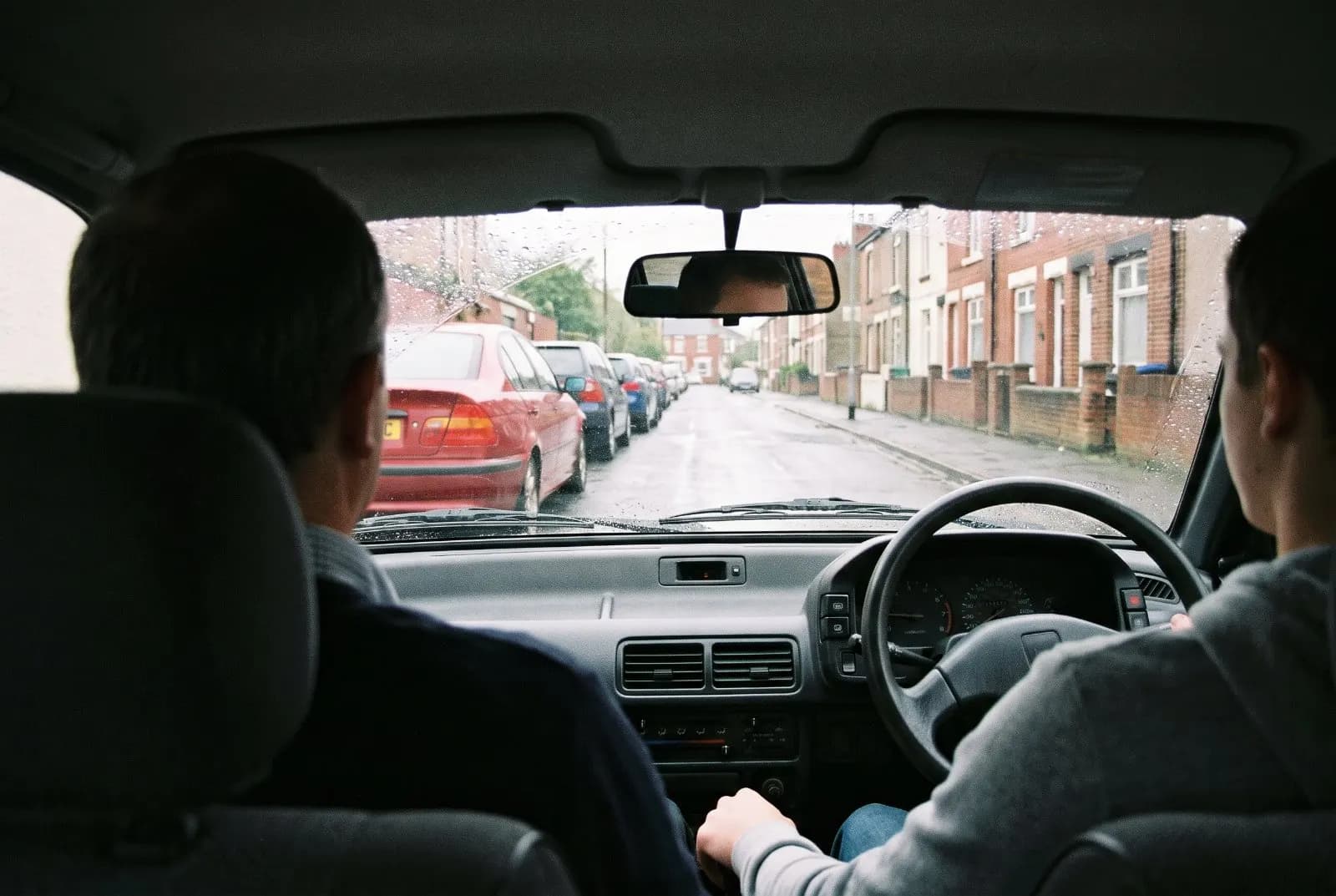
You’re sat at a set of traffic lights. Your pupil stalls. You talk them through finding the bite, easing the clutch, a bit of gas — and off they go, textbook. Job done? Not quite. Because if the real reason they stalled was that they panicked about holding up the queue behind them, that beautiful clutch control won’t save them the next time the pressure’s on. That gap between the fault you can see and the reason underneath it is exactly what the GDE Matrix exists to close.
The GDE (Goals for Driver Education) Matrix was built to give instructors a structure for developing drivers who stay safe long after the test certificate is in their hand. It’s four levels deep and three columns wide — and once you understand how it fits together, it stops being a piece of theory and becomes one of the most practical tools in your kit.
In this post we’ll walk through all four levels, explain what each column is actually asking of you, and give you real ways to bring it into next week’s lessons.
The Structure: Four Levels, Three Columns
Most instructors meet the matrix as a grid on a training slide and quietly file it under “interesting, not urgent.” So let’s make it concrete. The four levels run from the broadest human influences down to the mechanics of the car:
The Person
Beliefs, personality, life experience, motivations, social groups. Who is this human, and how will that shape their driving?
The Journey
Why they’re driving, where to, with whom, in what emotional state — and whether driving was the right choice at all.
The Road
Rules, hazards, traffic, conditions. Awareness and judgement — the stuff the driving test marks.
The Vehicle
Control, manoeuvres, and understanding what the car is telling you. If I do X, the car does Y.
Then each level is cut into three columns. Knowledge — what do they know and believe? Risk-increasing factors — what’s feeding into their decision-making, and what do they find acceptable behind the wheel? And self-evaluation — can they honestly assess themselves against that, spot where the danger sits, and do something about it in advance?
You’re not teaching topics. You’re teaching Jane the mum, John the footballer, Derek the musician. The skills, pressures and beliefs they walk in with will shape their driving far more than the number of roundabouts you cover.
Level 4: Start With the Person — On Lesson One
There’s a temptation to read the matrix bottom-up: do level one, then two, then three, and get to level four when there’s time. Flip it. Level four belongs in the first driving lesson, because everything else filters through it.
Your pupil arrives with at least seventeen years of life experience already loaded. They’re seeing the road through eyes that aren’t yours. So find out what’s there. What are their beliefs about driving, and where did those come from? What are their social groups like, and how do those people drive? Are they a thrill-seeker or someone who’s anxious about everything? What’s actually motivating them to learn — because that motivation will carry through the next forty to fifty hours.

Turning personality into risk — and then into a plan
The risk column asks a blunt question: which parts of this person’s character add danger to their driving? An anxious pupil won’t just be anxious on test day — they’ll be anxious on a slip road in three years’ time. A short-tempered pupil will meet a bad driver eventually. A people-pleaser will over-give-way and create problems behind them. None of these get solved by brushing past them.
Age matters too. The brain isn’t fully developed until around 25, and the part that calculates risk is among the last to arrive — which is why young people happily jump out of aeroplanes. Simply making a pupil aware of that can help. If they know their internal risk meter is running low, they can build external checks instead.
“If you’ve got someone who’s anxious, they’re not just anxious in your car. The solutions usually already exist somewhere else in their life — your job is to find them and bring them across.”
Then comes self-evaluation, and this is where the value lands. Get the pupil to reflect on their own personality and social world, and to name which bits will affect their driving. A pupil whose mates all drive fast usually knows it. Right now — before they’ve got the confidence or the licence — they probably don’t want to be that driver. Harness that. How will they handle the peer pressure? How will they say “I don’t feel safe” as a passenger? Those conversations are what prevent the collisions that actually kill people.
Level 3: The Journey Behind the Journey
Level three is about why the journey is happening at all, and everything wrapped around it. The mum running late for school pickup. The family that’s about to miss a flight. The student who’s tired, stressed and has an assignment due.
- 1Urgency and purpose. Why this journey, why now, and what pressure does that create?
- 2Route and roads. Familiar or unfamiliar? How long? Where would they break the journey if they needed to?
- 3Passengers. Who’s in the car, and what pressure do they bring — parents, mates, small children?
- 4Emotional state. Tired, hungry, stressed, elated. All of it changes speed choices and judgement.
- 5Was driving the right call? Four hours behind the wheel, or the train? Genuinely worth asking.
How to build this into lessons
Invite a parent into the back of the car and let your pupil feel what it’s like to have someone watching — including the pull to impress them. Ask about hobbies: if they go go-karting, what does that do to the drive home? If their football team have just lost a derby, how does that affect them? And it doesn’t have to be negative — what if they scored a hat-trick and the team want to celebrate?
Use real errands. If they want to visit their nan, drive to nan’s. Then take her to the shop. Where do you park when she’s got bags? How does her chatting affect their decisions? That’s an hour of genuine level-three learning that no roundabout drill will replicate.
Watch their performance curve too. If a pupil peaks around twenty minutes and starts flagging near the hour, that’s data. Talk about how they’ll break up a long drive and recognise fatigue before it bites.
Level 2: The Road — Where We’re Already Strong
Level two is rules, hazards, traffic, weather, night driving. As an industry we do this well, because it’s what the driving test marks. The one thing worth adding is a note of caution: a level-two-looking fault isn’t always a level-two problem.
A messy roundabout could be a knowledge gap, a judgement gap, a skill gap — or anxiety, or the context of that particular journey on that particular day. Ask “talk me through that roundabout” and the answer usually tells you which level you’re actually working at.
Bread and butter matters. Keep reflecting with pupils through the lesson and at the end: what went well, what are you strong at, what do we work on next? Level two is the bread — three and four are the jam.

Level 1: The Vehicle — Then One Step Further
Moving off, reversing, bay parking, turning corners: familiar ground. The step further is asking what the car is telling them, and whether they’d know how to listen. Where does the information on the dashboard come from? How often should they check the car, and does that change for a long trip versus the school run?
Don’t stop at “show me, tell me.” Have them walk around the car. How would they actually judge tread depth — and what happens if it’s low? What if the coolant runs dry, or they’re low on fuel on a motorway? Build these into the progress log so they become habit for both of you, and so nothing quietly gets skipped.
And bring the person back in even here. How experienced am I on different road types? How good am I at recovering a bad parking attempt — reset and start again, or work it out? That honest self-assessment is what stops repeated mistakes after you’re no longer in the passenger seat.
Making It Real: Meet Jane
Jane’s 35, a musician who tutors pupils in their own homes and still plays in a band at weekends. She’s moved from a city with great public transport to the countryside with none, so now she needs to drive. She carries some anxiety.
Start at level four. Does that anxiety show up elsewhere — before going on stage, perhaps, despite years of experience? If so, she’s already got coping techniques. Bring them into the car. And think past the test: the first time she’s the one driving everyone home from a gig, with friends who’ve driven for years watching her, is that anxiety going to spike?
Learning an instrument is a practical skill, so the way she learned guitar is a live clue to how she’ll learn to drive. She teaches music, too — she knows how learning works. Use it.
Now level three. The gigs are a motivator, but they’re also a risk profile: is there a drinking culture in that group? Has she always been the one who has a few because someone else drove? Late-night drives home on unlit rural roads bring fatigue and speed into play. And the tutoring? Spend a lesson driving round housing estates with the sat nav on, working out how she’ll find house number seven without crawling at one mile an hour with a queue behind her.
“Don’t stop at naming the danger. Every risk conversation should end with a solution the pupil can actually use after they’ve passed.”
For Jane, that might be music or singing to settle her nerves. For the gigs, it might be telling the bar staff on arrival not to serve her, or making the boundary clear to friends before she gets there. The specifics matter less than the principle: the pupil evaluates their own likely weak points, and the two of you build a plan together.
Where to Start This Week
- ✓Put level four in your first lesson. Goals, motivations, beliefs, how they learn.
- ✓Next time a fault appears, ask which level it really lives on before you fix it.
- ✓Plan one lesson around a real journey your pupil will genuinely make after passing.
- ✓End every risk conversation with an agreed, workable solution — not just a warning.
- ✓Add level-one and level-three checkpoints to your progress log so they don’t get skipped.
The GDE Matrix isn’t extra work bolted onto your lessons. It’s a way of making the lessons you already deliver land somewhere deeper — so the driver you sign off is still making good decisions on a wet rural road at eleven at night, three years from now, with nobody sat beside them.
Take Your Teaching Further
Inspire Instructor Training helps PDIs and ADIs turn standards into simple, practical, everyday lesson craft. Courses on the five skills, self-evaluation, levels of instruction and more — all in plain English.
Explore Inspire Instructor Training© 2026 Inspire Instructor Training — Where the learning never stops.