23 August 2026 · 7 min read
Fixing Driving Faults: Why the “Why” Matters More Than the Fix
Every driving instructor knows the frustration: the same fault keeps appearing, lesson after lesson, no matter how many times you’ve explained the correction. Too close to parked cars. Creeping over the speed limit. Sitting at a roundabout when the gap was clearly there.
Here’s the uncomfortable truth — if a fault keeps coming back, the problem usually isn’t the pupil. It’s the diagnosis. Most recurring faults aren’t what they appear to be on the surface, and until you find the real cause, no amount of correction will stick.
In this post, we’ll walk through five of the most common fault areas — awareness and planning, clearance, following distance, use of speed and undue hesitation — and share the diagnostic questions, games and golden nuggets that get to the root of the problem.
1.Awareness & Planning: Teach Them to Hunt for Information
When a pupil asks “what speed is this road?”, they haven’t just missed a sign — they haven’t yet learned where to expect one. Speed limit changes used to be marked with gateway signs on both sides of the road; now it can be a single sign on one side, and it’s not always backed up with paint on the road. Pupils have to work harder than ever to gather information.
So rather than pointing out what they missed, get them predicting:
“If you were in charge of the speed limit on this road, what would you set it at — and why? Now let’s look for confirmation. Does the council agree with you?”
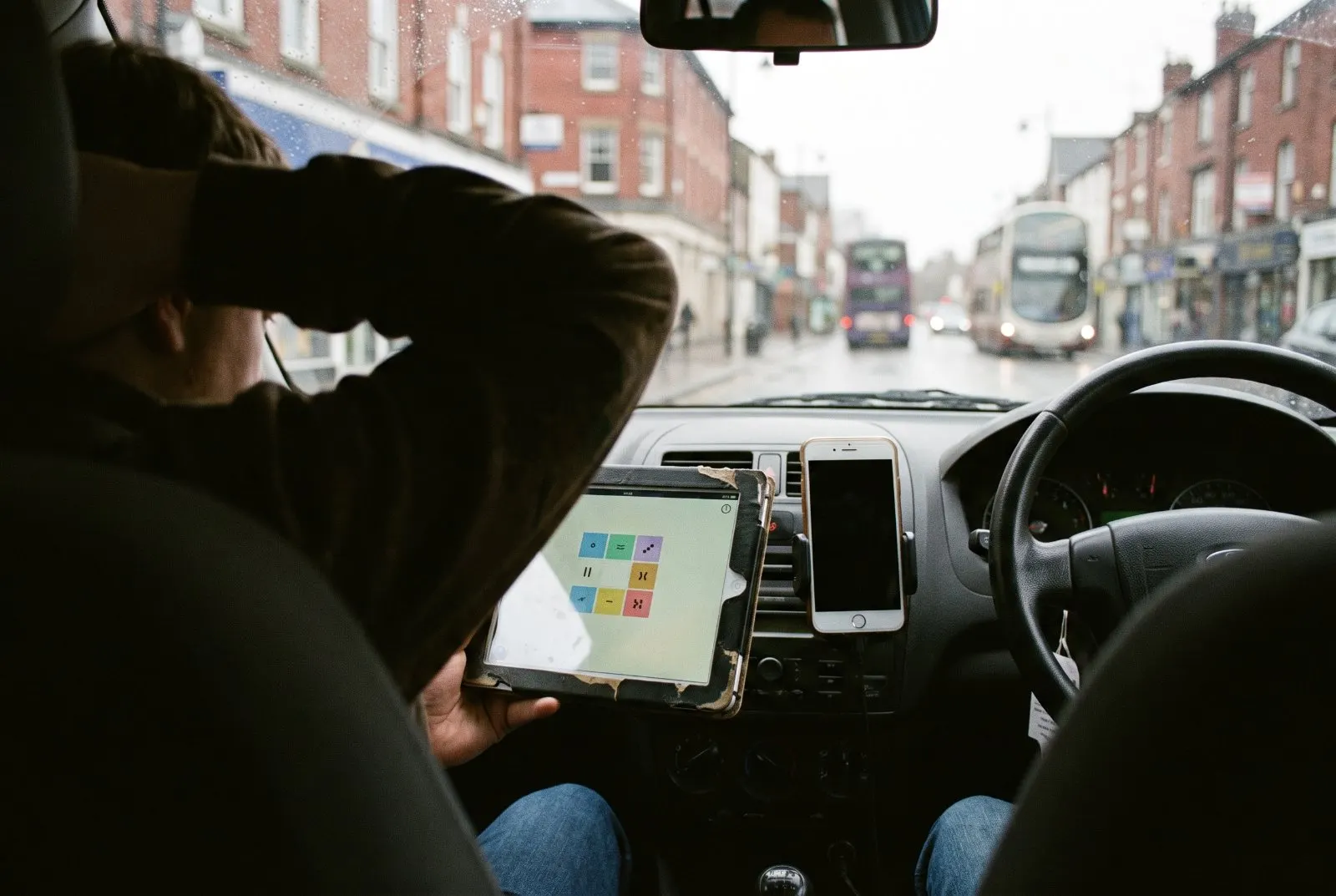
Suddenly they’re scanning and planning, not passively waiting to be told. Games work brilliantly here too: flashcard signs on the dashboard (talk about them first, then go hunting), sign bingo with a coffee at the drive-through as the prize, or commentary driving where you dial the difficulty up and down — narrow it to “talk to me about every road marking you see”, then open it right up to “tell me about everything”. It’s remarkable what pupils suddenly notice on a route they’ve driven for twenty minutes.

One word of caution: don’t dig deep on every sign, or their head will fall off. Treat digging deeper like a level of challenge. If they’re struggling to spot hazards, just spot hazards. Once they’re comfortable, pick one thing and explore it — and remember the conversation doesn’t have to finish before the next roundabout. Ask the “what if there was a bike there?” question, have a quick chat, drive the roundabout, then come back to it. Layer it through the session.
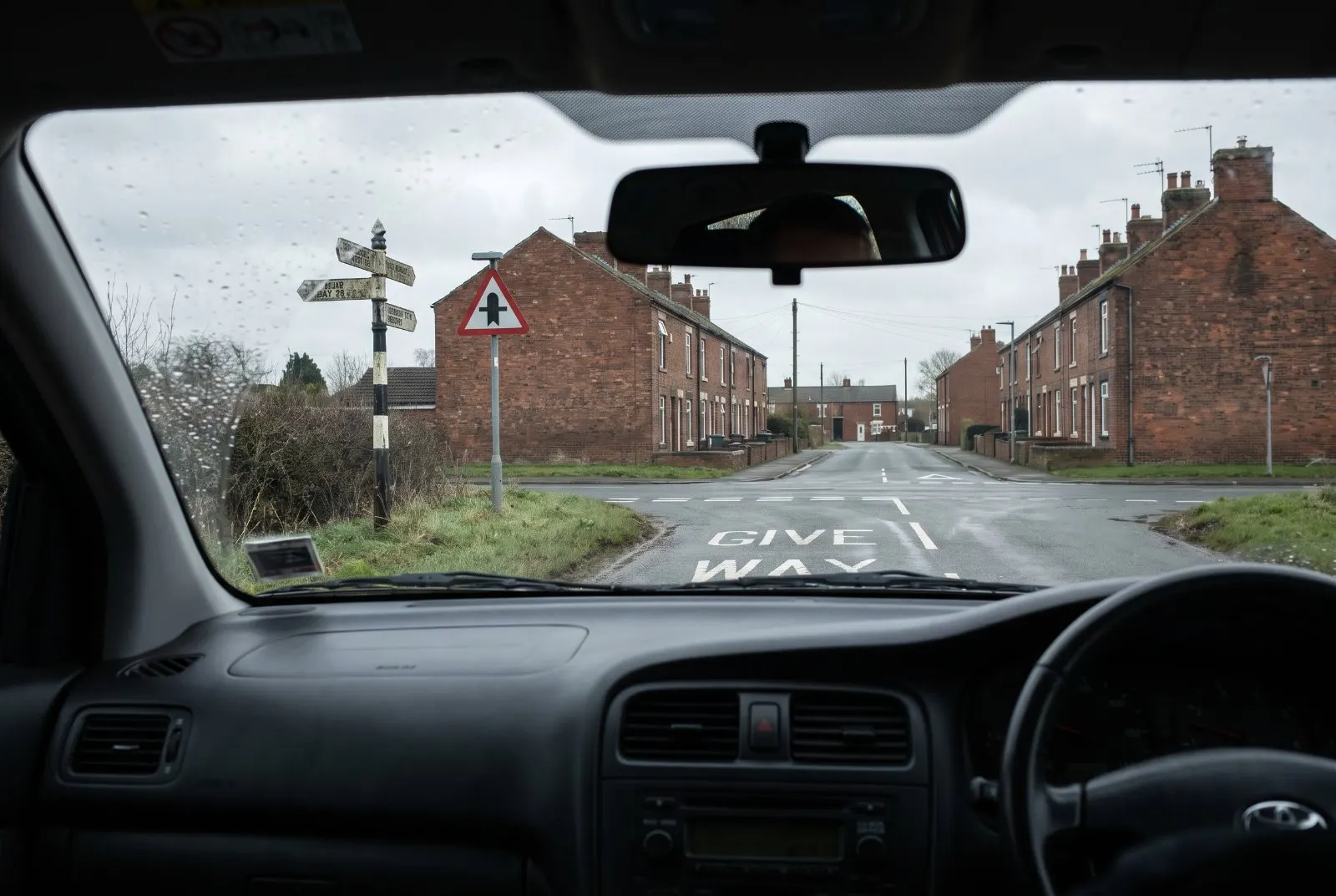
And sprinkle in golden nuggets as the moments arise: traffic built up on a side road means your lights are likely to change; pedestrians are statistically knocked down immediately before or after crossings — so that’s exactly where to look; and why did the council pay for two warning signs before that give way? Justify it. Those nuggets stick.
2.Clearance: It’s Rarely a Judgment Problem
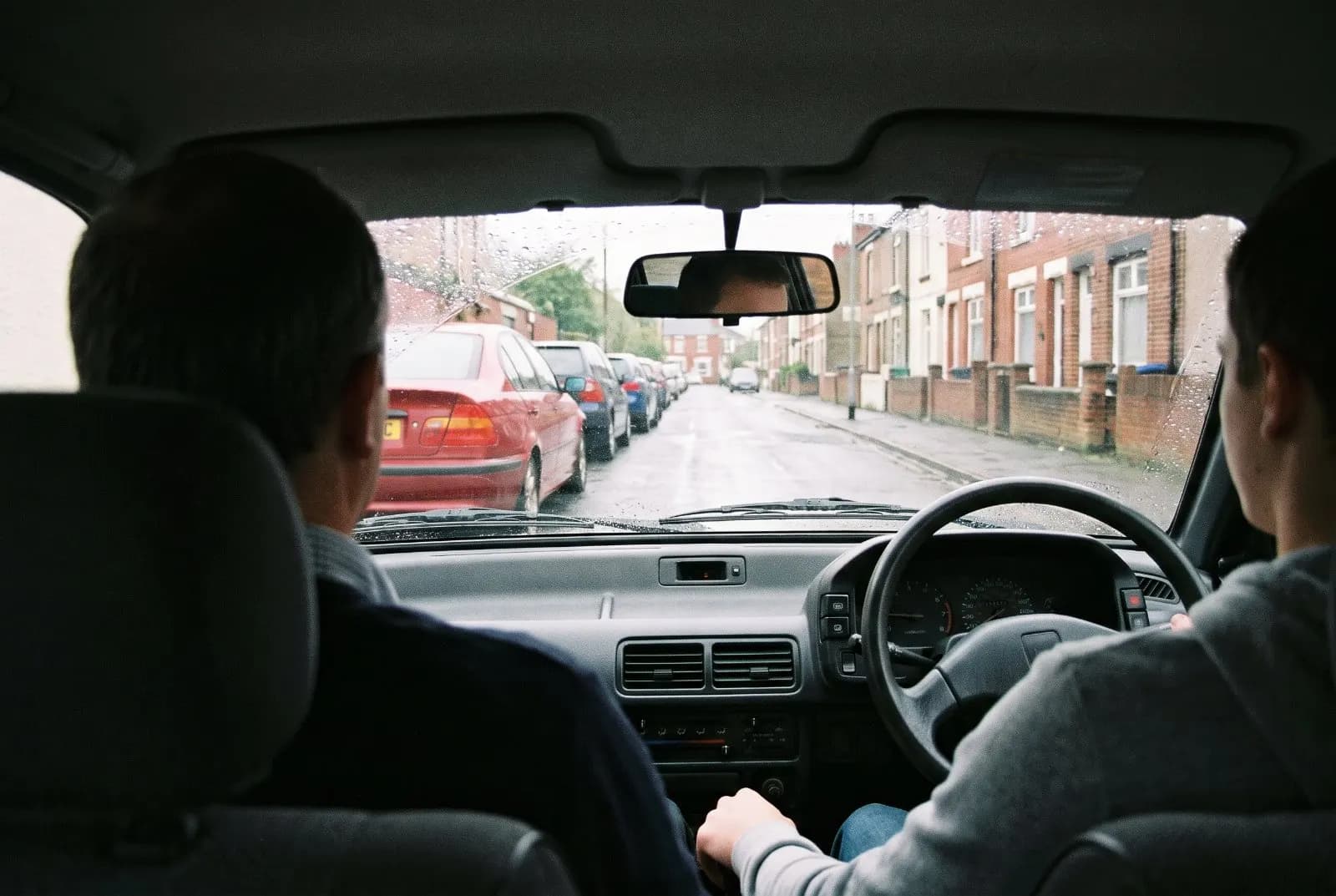
Here’s a reframe that changes everything: most clearance faults aren’t judgment faults. Pupils can judge the gap. What actually happens is they see the gap, decide to go for it — and then, as the oncoming car looms larger, they chicken out and drift towards the parked cars. That’s not a skill issue. That’s fear overriding a decision they’d already made correctly.
You don’t try to miss the parked car or miss the bus — you aim for the gap. The second you try to avoid something, you’ll overcompensate the other way.
The fix is trust and aim. Once they’ve placed the car for the gap, their eyes should move down the road to the next thing — not back to the bus coming towards them. If they look at the bus, it will look terrifyingly close, they’ll steer away from it, and the fault appears. The darts analogy lands well: if you aim at 20 by trying to miss 5 and 1, you’ll hit exactly what you feared.
For pupils who doubt the car will fit, use “copy and paste”: can you mentally lift the parked car, or the one coming towards you, and drop it into the space? If that car fits, yours does — nearly all cars are within a few inches of the same width.
“I fitted through the gap — so why do you want me to go slower?” Celebrate that question; it’s rapport and curiosity in action. The answer worth exploring together: in a tight gap you’ve lost the ability to swerve. If you can’t swerve left or right, you must be able to stop in the distance you can see. That’s what your speed is for.
Finally, if a pupil with normally beautiful clearance gets it wrong on a random occasion, something else almost certainly had their attention — a speed hump, a bollard, a pedestrian. That’s your clue to investigate, not correct.
3.Following Distance: Build the Safety Bubble
Following distance clicks when pupils see it as a bubble, not a rule. Two seconds in the dry, four in the wet, up to twenty in ice — but the real learning is what happens when the bubble gets squeezed. If someone sits one second behind you and you need a four-second bubble around the car, what has to happen in front? They work out the answer themselves: extend the gap ahead.
That directly challenges the old instructor habit of “just ignore the tailgater and drive normally”. You don’t drive normally — you make allowances, exactly as you would for a driver on their phone. And if the safety bubble doesn’t land, try social distancing: imagine the car in front has got Covid. Keep your distance.

Interestingly, this fault rarely appears early in training, because early pupils aren’t fast enough to follow anyone. It shows up around the 30-hour mark, when they catch a slower driver — often a learner — and move off from lights with experienced-driver expectations. Consider engineering the scenario: find a learner and follow them.
4.Use of Speed: Develop the Internal Speedo
Speeding faults often trace back to awareness — they simply didn’t know the limit — but perception plays a huge part too: 30 on a motorway feels painfully slow, while 30 on a tight country lane feels reckless. On wide, open, slightly downhill roads, creeping over the limit is almost inevitable — unless the pupil has built an internal speedo.
Have them settle at a speed that feels appropriate while looking down the road, then ask: “Without looking — what speed are you doing? Guess, then check.” The more they do it, the more they tune into what speed feels like, and the faster they self-correct when it creeps.
For pupils driving under the limit “to be safe”: explain that everyone fluctuates. Aim for 28 and you’ll dip to 25 — and now you’re a hazard being overtaken. Aim for 30, ease off when the internal speedo says you’ve crept to 32, and you’re fine. Make the limit the goal, not the ceiling.
Driving too slowly is usually fear or unfinished car control, so make progress fun:
Follow that carThey’ve “robbed a bank” — stay with them, everything safe and legal, without being detected.
Medal systemBronze, silver and gold for holding a two-second gap past a set number of cars or for a set time.
Stretch goalsTake them on faster roads early — comfort at 70 makes 30 feel easy back in town.
5.Undue Hesitation: Look at the Gap, Not the Car
Undue hesitation is the same skill — or missing skill — as pulling out in front of traffic, just showing the other face. Some pupils scan for cars instead of gaps, so all they ever see are reasons to stay put. Redirect their attention: “When might the next gap come? Does the gap on the right marry up with the one on the left?” Focus on the solution and the fault fixes itself.
Then there’s the pupil who goes to go — and bottles it. That’s a conversation about what changed their mind between decision and action. And the one who says “I could have gone” after the event: ask what they can see now that they couldn’t see then. The answer is nearly always that they were staring at the car, not the space.
Undue hesitation is rarely about actual hesitation. It’s normally a lack of skill — and the pupil will almost tell you the answer in the why.
Remember hesitation isn’t just junctions and roundabouts. It’s slow moves at traffic lights, unnecessary stops at crossings, daydreaming in traffic. Keep them anticipating: when will the lights change? What’s filtering up behind? And remember — you’re teaching them to drive everywhere, not just where you live.
The Golden Thread: Diagnose Before You Fix
Across every one of these fault areas, the pattern is the same. The fault you can see is rarely the fault that needs fixing. Clearance faults are fear. Speed faults are perception. Hesitation is attention in the wrong place. Ask why, dig gently, and pupils will almost always tell you the answer themselves.
That’s the difference between correcting a fault and actually fixing one.
Want more fault-fixing frameworks in your car?
Join live training sessions, full courses and a community of instructors who share what’s actually working in their cars — every week at Inspire Instructor Training.
Join Inspire Today →