Levels of Instruction: Theres more than just 3
In driving instruction, we love neat labels. They make the job feel more predictable and they give Instructors something solid to hold onto when everything still feels fast, noisy, and slightly chaotic.
One of the most common “maps” people use is:
- Full talk-through
- Prompts
- Independent driving
It’s simple. It’s memorable. And it’s also where a lot of instructors accidentally trap themselves.
What happens in the car is fluid. It shifts by road type, risk level, the learner’s workload, their confidence, their personality, their neurotype, and even how well they slept last night. You might have a learner who is genuinely capable of independent lane discipline but needs detailed support on roundabouts. Or someone with great awareness who gets overwhelmed if you talk too much. Or someone whose decision-making is sound, but their vehicle control collapses under pressure.
So rather than thinking “Which box am I in?”, it’s more useful to think:
What level of support helps this learner succeed safely right now—without stealing their responsibility?
That question opens up far more options than most instructors realise.
Why Questions aren’t always the answer
A big misconception in our industry is that coaching equals questions, and instructing equals “not coaching.” That’s where PDIs in particular can end up doing the wrong thing at the wrong time.
There are moments where a question is brilliant — it reveals thinking, builds awareness, and supports decision-making.
And there are moments where a question is a distraction.
If the car is in a time-critical situation, “What do you think?” can actually increase risk. The learner doesn’t need to search their brain for the “best” answer; they need a clear, timely instruction — and then reflection afterwards.
Direct instruction isn’t the enemy of coaching. Used well, it’s part of coaching. It can protect safety, reduce overload, and give the learner a clear structure they can later own.
The skill is knowing when you’re helping them learn.
.

The Reality: Instruction is a sliding scale.
-
The reality: instruction is a sliding scale
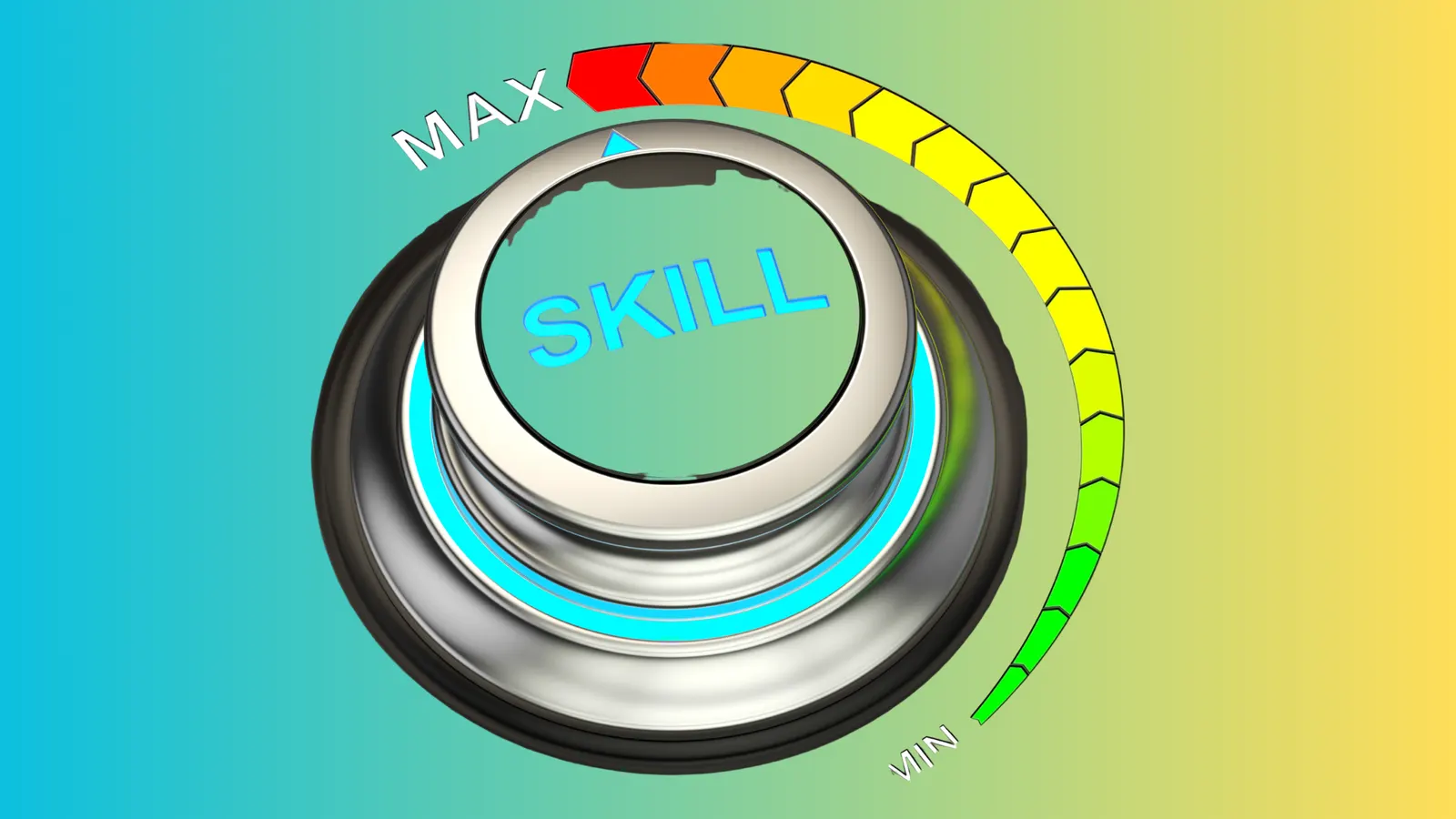
The most helpful shift you can make is to stop thinking of instruction as three categories and start thinking of it as a dial.
You can turn that dial up and down in seconds.
And you can set it differently for different skills happening at the same time. For example: you might “turn up” support for speed control while keeping roundabout decision-making with the learner. Or you might offer high support on the approach but let them take responsibility in the gap selection.
Once you accept the dial, you start to see levels of instruction everywhere — including several that aren’t usually named.
-
Here are the most useful ones.
1) Silence as instructionYes, silence is a level of instruction.
Purposeful silence gives learners space to process, self-correct, and build ownership. It’s not “doing nothing.” It’s allowing learning to land.
Silence works best when car control is stable and the environment is appropriate — and when you’re genuinely ready to step in if safety needs it.
Used badly, silence becomes hope. Used well, it becomes independence training.
2) Experiential learning: letting them feel it
The most powerful learning doesn’t usually come from what we say — it comes from what they experience.
And ideally, that experience is positive.
When a learner gets something right and feels it — the smooth approach to a junction, the perfectly judged roundabout gap, the calm control through a tight space — they can feel success. It builds confidence, reinforces good decision-making, and creates a neurological “this works” imprint. Positive experiences are often the safest and strongest place to learn from, because they build capability without fear.
But experiential learning isn’t only about celebrating the wins.
When risk is well managed and the environment is appropriate, mild negative experiences can also be powerful teachers. For example, slightly misjudging speed on approach and feeling how it unsettles the whole routine can create a clearer understanding than any explanation ever could. The key is that the consequence is low-cost and controlled — not overwhelming, not unsafe, and not humiliating.
This isn’t about “letting them fail.” It’s about creating structured experiences — positive first, and occasionally corrective — where the lesson is learnt because they felt it, not because we told them.
3) Full talk-through (high detail)
This is the classic. But it’s not one thing.
High-detail talk-through is at its best when the learner is brand new to a skill or the workload is so high they need a full scaffold:
- what to do
- when to do it
- and how it should feel
It’s especially useful early on, and it can be essential for some neurodiverse learners who need clear sequence, predictable steps, and reduced ambiguity.
The trap is staying here because it feels safer for us.
4) Reduced talk-through (the shorthand version)
This is still talk-through, but now you’re using shared language and assuming some prior learning:
- “Clutch… bite… set gas… release…”
- “Mirrors… ease off… second… steer…”
It’s often the bridge that gets missed. Some instructors jump from detailed talk-through straight into “prompts,” and the learner wobbles because the structure disappeared too quickly.
Reduced talk-through keeps the structure while slowly handing more processing back to the learner.
5) Specific prompts (targeted nudges)
These are the prompts that steer attention to exactly what matters:
- “What mirrors are you going to check?”
- “What gear do you need here?”
- “What speed feels right on approach?”
This is still high support — it’s just delivered in a way that keeps the learner active.
Think of it as guiding their spotlight rather than doing the thinking for them.
6) Thoughtful prompts (decision prompts)
Now you’re prompting judgement rather than mechanics:
- “How are you deciding when to go?”
- “Is anyone approaching quickly from behind?”
- “What’s your plan if they don’t slow?”
These questions activate scanning, anticipation, and decision-making — without you handing them the answer.
They’re powerful, but they must match the learner’s capacity in the moment. If the situation is already overloaded, thoughtful prompts can become noise.

7) Physical and non-verbal prompts
Most instructors do this without realising it:
- a glance that says “I’m expecting a mirror check”
- a pause that creates pressure to think
- the sideways nudge with your hand to fix a positional issue
- the “I’m watching you” look
- even reaching for the door handle when you’re nervous
These prompts absolutely shape behaviour — especially for anxious learners who are highly attuned to your cues.
The important part isn’t whether you do them. It’s whether you do them intentionally and whether you’re aware of the message you’re sending.
-
8) Statements instead of questions
This is one of the most underused tools.
A statement can prompt awareness without the cognitive load of a question and without the control-grab of an instruction:
- “That green light’s been on a long time…”
- “Slow down for me, tell me why…”
- “That bend looks sharper than it did at first glance…”
- “That looks a bit tight through here…”
It nudges the learner to reassess without you forcing a response.
For many learners, statements create calmer thinking than questions — because they don’t feel like they’re being tested.
9) Questions that reveal mindset (not just actions)
When questions are useful, they’re often useful because they give you access to what the learner is prioritising:
- “What hazards are you considering up ahead?”
- “Where’s your biggest risk — front, side, or behind?”
- “What’s the next thing that could cause you to slow, stop, or move over?”
These aren’t about getting a “right” answer. They’re about understanding how the learner is thinking so you can decide what support they need next.
10) Independent driving with no assumptions
This sounds like independence, but it’s really supported independence:
- “Talk me through what you’re doing.”
- “What’s your plan here?”
- “What are your thoughts?”
It’s a brilliant safety blanket level — because you’re not grabbing control, but you’re also not blindly trusting.
This matters in situations where you need insight quickly, such as long green lights, higher speed approaches, or moments where the learner hasn’t shown you any sign they’ve processed the hazard.
11) Independence with self-prompting
This is a level many instructors miss entirely: teaching learners to prompt themselves.
When you reduce your prompts, the learner needs replacements:
- “When you see the roundabout sign, what does that trigger you to do?”
- “What will remind you to check mirrors before slowing?”
- “How will you know in an unfamiliar area?”
It’s also where you challenge weak prompts gently:
- “You slow down by the bin… what if there’s no bin?”
- “You might know because you’ve done this road before… what about when you haven’t?”
The goal is a prompt that transfers across roads, moods, and situations.
12) Control before educate: demonstration and shared responsibility
Sometimes the best teaching move is to reduce the task to something manageable.
That might mean:
- a short demonstration drive
- taking temporary responsibility for speed while they focus on roundabout routine
- breaking manoeuvres into tiny, non-threatening steps
This is especially powerful for neurodiverse learners and anyone who gets overwhelmed by “the whole manoeuvre” as one big scary event.
If you can take the mammoth and turn it into small wins, you change the learner’s emotional relationship with the task — and that changes their performance.
What sets the “right” level?
A simple truth: the better your analysis, the easier it is to choose the right support.
If you’ve analysed well, you’ll know:
- is this a skill issue?
- a knowledge issue?
- an attention issue?
- a mindset issue?
- or an overload issue?
Without analysis, instructors may default to what they personally prefer: either talking too much (to feel in control) or asking questions too soon (to “coach”).
With analysis, the dial becomes intentional.
The takeaway
If you only have three settings — talk-through, prompts, independent — you’ll keep bouncing between overhelping and underhelping.
But when you recognise the full range, you gain something far more useful than a label:
You gain choice.
You can step in without guilt.
You can step back without fear.
And you can tailor your support to the learner’s needs — not to a simplified framework.
Because there isn’t one “correct style” of instruction.
There’s just the right response to the moment.
7 DAY FREE TRIAL
If this has challenged how you think about support in the car, that’s the point.
At Inspire, we don’t just talk about theory — we show you how it plays out in real lessons, with real learners, and real-time decision-making. You’ll see how the levels shift, how analysis drives instruction, and how experienced instructors adapt without losing safety or learner ownership.
If you’d like more practical insight, deeper breakdowns, and behind-the-scenes access to how this actually works on the road, come and explore Inspire.
You can join HERE and get 7 days free — no pressure, just the opportunity to see whether it sharpens your thinking and strengthens your teaching.