22 June 2026 · 6 min read
Choosing the Right Practice Area: The Hidden Skill Behind Every Great Lesson
Choosing the Right Practice Area: The Hidden Skill Behind Every Great Lesson
The road you pick does half the teaching for you. Here’s how to plan an area that makes learning easier, harder, and free of distractions — exactly when you need it.
Ask any examiner what separates a controlled, purposeful lesson from one that drifts and you’ll often land on the same quiet answer: the area. Get your practice area right and the road does half the teaching for you. Get it wrong and you spend the whole lesson firefighting.
“Were the practice areas suitable?” is one of the competencies trainee instructors worry about least — and it’s one that catches the most people out on a Standards Check or Part 3. In this post we’ll unpack how to plan an area properly, why over-complicating a route quietly sabotages learning, and the in-the-moment question that keeps every lesson on track.
The area is part of pitching the lesson
We talk a lot about pitching a lesson at the right level for the pupil. What’s easy to miss is that a huge part of that pitch comes from where you choose to teach. Making a lesson harder or easier isn’t only about what you say or how much you intervene — you can change the difficulty simply by changing the road.
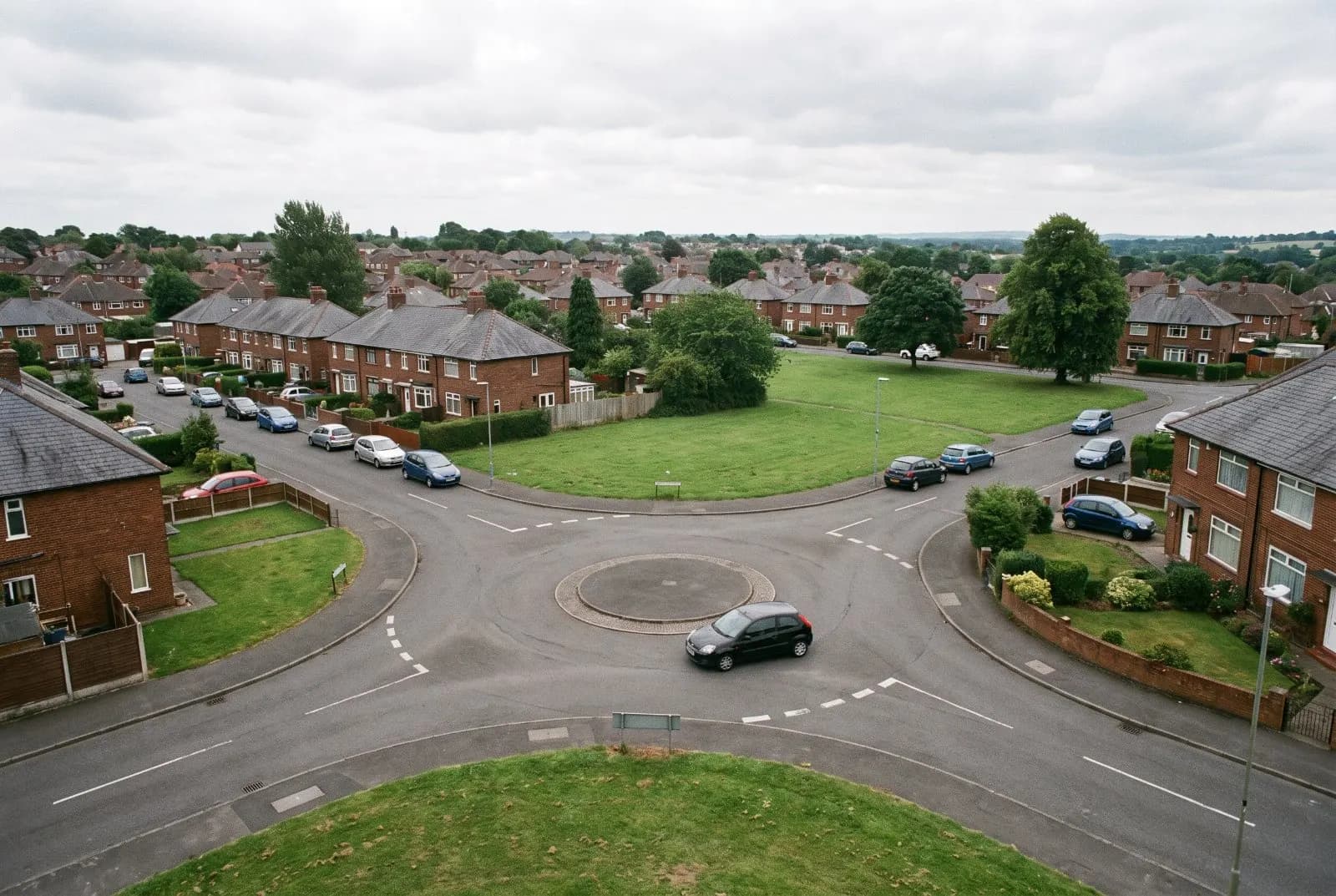
Take roundabouts, since everyone loves teaching them. A good roundabout lesson starts with a planned loop in mind. Begin with left turns so the pupil can focus on the approach without the extra load of navigating across the roundabout. Make sure there’s somewhere safe to pull over for a check-in. A set of traffic lights on the loop is a bonus — those natural pauses give you breathing space to coach. And crucially, the loop shouldn’t be littered with tricky meeting-traffic situations or awkward crossings. This is a roundabout lesson. Nothing else should be fighting for attention.
A great practice area maximises the learning opportunities for the one thing you’re working on — with as few extra complications as possible. The skill you want to practise should be the main event, not a sideshow.
Build a loop with options baked in
The best areas aren’t just suitable for today — they flex. When you plan a loop, plan in the ability to dial it up or down on the spot:
A way to make it harder
Reverse the loop to do right turns instead of left, or have a second set of roundabouts two minutes away — busier or simply different — so the pupil has to apply skills in a fresh context rather than running on autopilot.
A way to make it easier
Know where the nearby housing estate is. If it’s a routine or control issue, strip the roundabout out and rehearse the same skills on quieter junctions, then build back up.
Somewhere to pull over
Always have a safe stopping point — and even a car park where you can park up, walk over and look at a roundabout together if you need to change the teaching tool entirely.
The same thinking applies to everything you teach. Planning a meeting-traffic lesson? Have a road with parked cars all the way down, a tighter-but-quieter option around the corner, and a near-empty street where the pupil can practise control by imagining oncoming traffic — “pretend a car’s coming, where would you position?” Easier, harder, somewhere to stop. That’s the toolkit.

The distraction trap: less is more
Here’s a tell-tale sign your area is working against you. If your lessons keep getting sidetracked — “oh, let’s talk about that because it went wrong… and that… and that” — the problem usually isn’t the pupil. It’s that the route is carrying too many extra demands.
Imagine you set out to teach pedestrian crossings, but your loop has two crossings and three roundabouts. That’s not a crossings lesson — that’s a roundabout lesson in disguise, with crossings squeezed in around the edges. Every extra feature is another thing that can derail the focus.
“I wanted to do that one roundabout.” A whole Part 3 unravelled because a trainee took a hard meeting-traffic road to reach a single roundabout — when an easier route led to the very same place.
That trainee got into a difficult meeting-traffic situation, didn’t support the pupil through it, and the pupil came unstuck. The reason they were even on that road? They wanted one particular roundabout — and added all that complication to get to it. Don’t chase the “perfect” feature down a road full of risk when a cleaner route does the job.
Detail and consistency bring an area to life
It’s worth flagging the opposite error too, because it’s just as common. The official guidance warns about taking a pupil into an area beyond their competence — where they spend the whole time surviving with no headroom to learn, or are exposed to risks they can’t manage. True. But it’s surprisingly easy to over-correct and make the area too easy.
Picture a pupil on a 60mph country road approaching a roundabout, with a clear need around approach speed. The trainee moves them into a 30mph housing estate with narrow roads — and suddenly the pupil looks like they could do it in their sleep. Why? Because the whole point was the 60mph approach to a closed junction. That’s the bit that hadn’t been uncovered.
The skills can look similar from road to road — approach speed, car control, awareness, planning — but the detail matters. A 60mph approach and a 20mph approach demand very different things. That detail and consistency are what make a practice area genuinely fit for purpose.
You don’t have to fix it where it broke
One last shift that transforms how you use an area: if a pupil makes a mistake at a particular roundabout, you don’t have to fix it at that roundabout. Find out what the need was and why it happened — then use the next features to put it right. With a good loop, a mistake on one roundabout gives you three more to work on it before you circle back. By the time you return, it’s already sorted, and you’ve shown the learning has landed.
Use it back-to-back
Two roundabouts close together beat an 18-minute drive to the same one. Check the map.
Work every feature
Passing traffic lights on the way to more lights? Ask what you can do with these ones now.
Transfer the skill
Fix the need on the next junction, then return to prove the improvement has stuck.
The question to ask in the moment
All of the above is planning. But the real discipline happens behind the wheel. Every time you decide to go left or right, down this road or not, ask yourself one thing: is this going to help the lesson? Are you adding to your pupil’s learning — or are you about to spend twenty minutes driving to one beautiful roundabout because you’re bored of the loop? You might be bored. Your pupil almost certainly isn’t. They’re in it, learning, building patterns. Protect that.
Plan a loop with easier, harder and a place to pull over. Cut the distractions. Mind the detail. Fix needs on the next feature, not the one where it broke. Do that, and “Were the practice areas suitable?” stops being something to worry about — and becomes one of your quiet strengths.
Want to sharpen every part of your teaching?
Inspire Instructor Training helps PDIs and ADIs build the skills, confidence and structure to deliver outstanding lessons — and pass with credit. Join instructors across the UK who are levelling up their practice.
Explore Inspire Instructor Training →